When Life Throws Everything at You: Leading Through Setbacks to Comeback
Setbacks don't wait for a convenient moment.
Whether you've experienced recent redundancy, navigating a serious health diagnosis, or managing a family crisis setbacks can arrive all at once, and they don't discriminate by seniority or experience.
What does resilience actually look like?
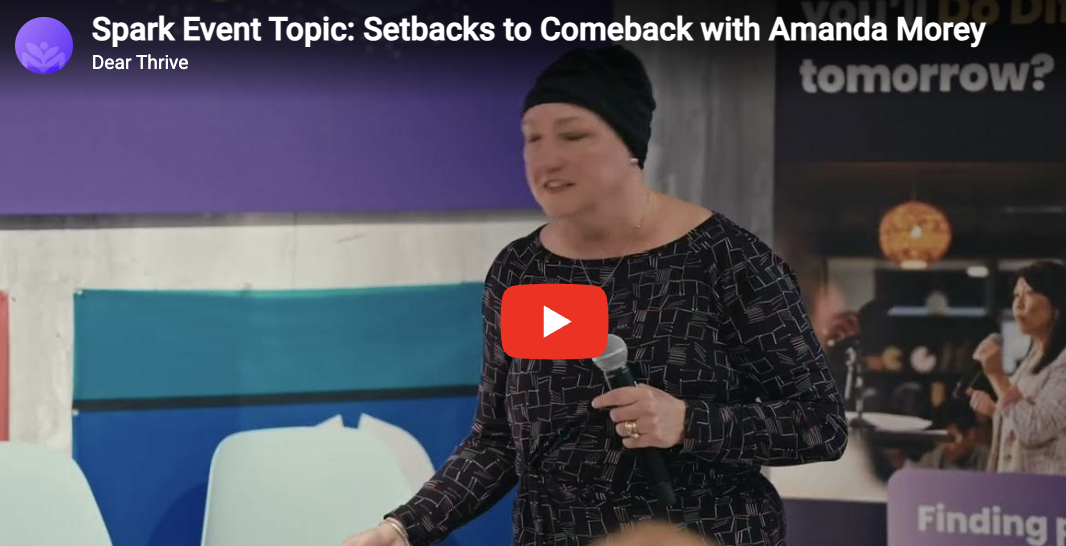
Amanda Morey, one of Dear Thrive's coaches, knows this firsthand. She has faced a breast cancer diagnosis, job redundancy, and permanent hair loss — not separately, but as part of the same season of life. What stands out about Amanda isn't just that she got through it. It's how she did: with humour, perspective, and a leadership presence that never wavered.
Her story is a masterclass in what resilience looks like in practice — not the polished, retrospective version, but the messy, real-time kind.
Why resilience is a leadership skill
The capacity to lead through uncertainty isn't a personality trait you're born with. It's a skill. And like any skill, it can be developed — especially when you have the right support around you.
Research consistently shows that leaders who build self-awareness, seek coaching, and invest in their own development are better equipped to handle disruption, model stability for their teams, and recover faster from professional and personal setbacks.
If you're in it right now
If you're currently working through a career or workplace challenge, you don't have to figure it out alone.
Amanda is available for one-on-one coaching sessions through the Dear Thrive platform. She brings lived experience, professional expertise, and a style that makes even the hardest conversations feel human.
Book a session with Amanda Morey →
Frequently asked questions
What is resilience in leadership?
Resilience in leadership is the ability to maintain effectiveness, composure, and direction during adversity, and to recover and grow from setbacks rather than being derailed by them. It includes emotional regulation, adaptability, and the capacity to model stability for others, even when circumstances are uncertain or difficult.
How do you lead through a personal or career setback?
Leading through a setback involves building self-awareness, seeking support such as coaching or trusted advisors, maintaining perspective about what is and isn't within your control, and developing practical skills to adapt to change. It also means being honest with yourself and your team, rather than performing a version of strength you don't feel.
Can resilience be developed, or are you born with it?
Resilience is a skill, not a fixed personality trait. Research consistently shows it can be strengthened through self-awareness practice, coaching, community support, and intentional reflection. Leaders who invest in their own development are better equipped to handle disruption and recover faster from both professional and personal setbacks.
What is the difference between resilience and just pushing through?
Pushing through usually means suppressing difficulty and carrying on without processing what has happened. Resilience is more nuanced: it involves acknowledging the challenge, drawing on support, and adapting your approach so you can return to effectiveness without burning out or losing perspective. Genuine resilience often includes allowing yourself to slow down before you can move forward.
How can coaching help after redundancy or a major career change?
Coaching after redundancy provides a structured, confidential space to process what has happened, clarify your values and career direction, rebuild confidence, and develop a practical plan for what comes next. A good coach will challenge unhelpful thinking patterns while helping you reconnect with your strengths. This is particularly valuable in the early weeks after a setback, when clarity can feel out of reach.
How do leaders maintain presence for their teams while navigating personal hardship?
The key is not to perform wellness you don't feel, but to be appropriately transparent with your team about what is happening, without making them responsible for managing it. Seeking external support such as a coach or advisor means you have a dedicated space to process difficulty, freeing you to show up more consistently for those who rely on you.
What role does humour play in resilience?
Humour, used well, can be a genuine resilience tool. It creates perspective, signals to others that you haven't lost yourself to the situation, and can defuse tension in difficult moments. It is not about minimising what has happened, but about preserving a sense of identity and lightness that difficulty can strip away.
When multiple things go wrong at once, where do you start?
When setbacks stack, the first step is to stop trying to solve everything simultaneously. Triage by urgency and energy cost, identify one area where you can take a small, concrete action, and focus there first. Getting external support such as a coach or trusted mentor helps enormously at this stage, both as a thinking partner and as a source of perspective when your own is compromised by stress.
How long does it take to recover from a major professional setback?
There is no fixed timeline. Recovery depends on the nature and severity of the setback, your existing support structures, whether you're dealing with compounding challenges, and how quickly you access the right kind of help. What research does show is that proactive support, self-awareness, and connection consistently shorten recovery time and improve long-term outcomes.
What is the Dear Thrive approach to resilience coaching?
Dear Thrive connects leaders with experienced coaches who bring lived experience alongside professional expertise. Rather than a prescriptive program, the approach is tailored, human, and focused on what the individual actually needs, whether that is processing a recent setback, rebuilding career confidence, or developing longer-term resilience skills. Sessions are accessible through the Dear Thrive platform with flexible one-on-one booking.