The Art of Powerful Communication & Influence for Leaders
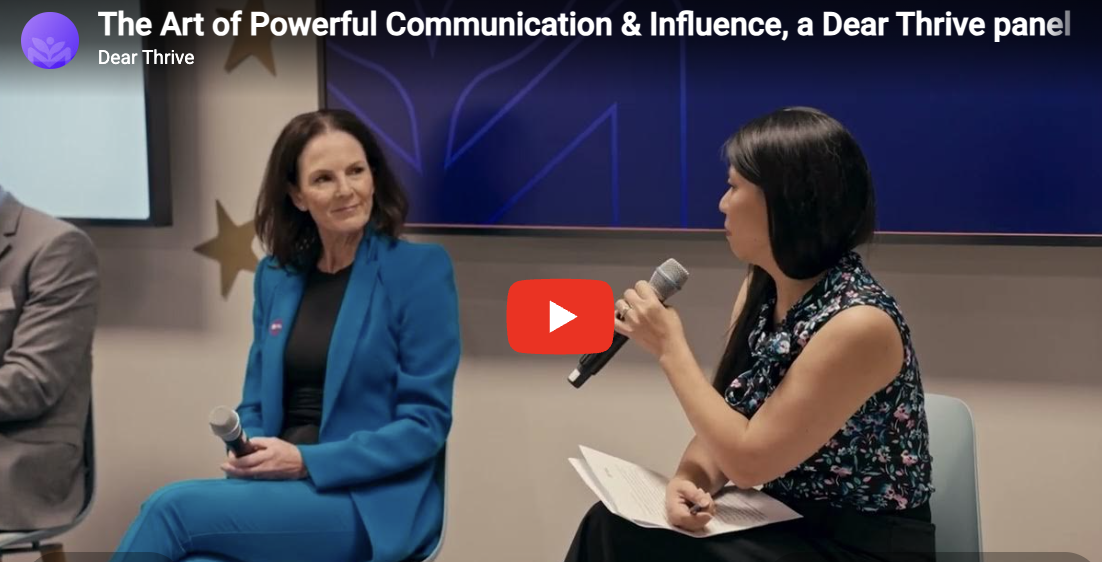
How storytelling, executive presence, and visibility shape the leaders people remember.
Being good at your job gets you so far. Being able to communicate what you bring, that's what gets you noticed, trusted, and into the rooms that matter.
Dear Thrive partnered with Expedia Group to host an evening panel discussion exploring the real mechanics of powerful communication and influence. Hosted by Amanda Behre, CEO and Founder of Dear Thrive, the conversation brought together three practitioners who work at the intersection of storytelling, visibility, and leadership presence.
Meet the Experts
Pauline Linton Head of Social & Brand Communications, Adobe APAC
A senior communications leader with deep experience building brand narratives that resonate across complex organisations and diverse audiences.
Luke Hannan Public Speaking Advisor and Professional MC
A specialist in helping leaders find their voice, command a room, and deliver with confidence, whether on a stage or in a boardroom.
Karen Eck PR Expert, Visibility Strategist and Founder of Power of Visibility
Karen works with leaders who are ready to step into a more public profile, building the credibility and consistency that turns expertise into influence.
What We Covered
What does "executive presence" actually mean?
Executive presence is often described as something you either have or you don't. Our panel pushed back on that. It's a set of learnable skills, how you show up, how you hold a room, and how clearly you communicate your thinking under pressure. It starts with self-awareness and grows with deliberate practice.
Why storytelling is a leadership skill (not a soft skill)
Data informs. Stories move people to act. Whether you're pitching an idea to a leadership team, presenting a strategy to stakeholders, or speaking at an industry event, your ability to frame your message as a narrative determines how much of it lands and how much is forgotten.
The most effective communicators in the room aren't always the most senior. They're the ones who've learned to translate complexity into meaning.
How to build visibility without self-promotion that feels uncomfortable
Many leaders, particularly women and those earlier in their senior leadership journey, find visibility uncomfortable. Karen Eck reframed it: visibility isn't about broadcasting yourself, it's about showing up consistently where it matters. LinkedIn, industry events, internal advocacy, and media opportunities all compound over time. Influence is built through repetition and relevance, not a single moment.
The confidence gap and how to close it
Public speaking anxiety is nearly universal. Luke Hannan's work centres on the practical: preparation, structure, and learning to reframe nerves as energy. The leaders who communicate most powerfully aren't fearless they've simply built a toolkit they trust.
Key Takeaways for Leaders
- Your communication IS your brand. How you articulate your ideas shapes how others perceive your capability and potential.
- Storytelling is a strategic skill. Invest in it the same way you invest in technical expertise.
- Visibility compounds. Small, consistent actions, a LinkedIn post, a panel appearance, a well-prepared pitch build influence and presence over time.
- Confidence is a practice, not a trait. The most compelling communicators have learned to prepare and perform, not just wing it.
FAQs
How do I build executive presence as a mid-career leader?
Executive presence develops through a combination of communication clarity, self-awareness, and consistent visibility. Working with a coach, practising public speaking, and actively seeking opportunities to present your thinking in meetings, on panels, or in writing all accelerate the process. It is a learnable set of skills, not a fixed trait.
What's the difference between influence and authority?
Authority comes from your title or position. Influence is earned through trust, credibility, and the quality of your ideas. The most effective leaders develop both, but it's influence that sustains a career as organisations, teams, and industries evolve.
Can storytelling really make me a better leader?
Yes. Research consistently shows that narratives are processed differently to facts: they're more memorable, more persuasive, and more emotionally resonant. Leaders who can tell a clear, compelling story about a problem, a vision, or a decision are more likely to bring people with them. Storytelling is a strategic leadership skill, not a soft one.
How do I become more visible as a leader without feeling like I'm self-promoting?
Visibility is most sustainable when it's anchored in your values and expertise: sharing what you genuinely know, the challenges your industry faces, and the perspective you've earned. Consistent, generous sharing builds a reputation that attracts opportunity. LinkedIn, industry events, internal advocacy, and media opportunities all compound over time. Influence is built through repetition and relevance, not a single moment.
What is executive presence and can it be learned?
Executive presence is the ability to show up, hold a room, and communicate your thinking clearly and confidently under pressure. It is often described as something you either have or you don't, but that framing is unhelpful. Executive presence is a set of learnable skills that starts with self-awareness and grows with deliberate practice and the right support.
How do I overcome public speaking anxiety as a leader?
Public speaking anxiety is nearly universal, even among experienced leaders. The most effective approach is practical: invest in preparation, develop a reliable structure for your presentations, and learn to reframe nerves as energy rather than a signal to avoid the situation. The leaders who communicate most powerfully aren't fearless: they've built a toolkit they trust and practised using it.
Why does communication matter as much as technical expertise in leadership?
Being good at your job gets you so far. Being able to communicate what you bring is what gets you noticed, trusted, and into the rooms that matter. The most effective communicators in any organisation aren't always the most senior: they're the ones who have learned to translate complexity into meaning and to frame their ideas in ways that resonate with different audiences.
How do I build my personal brand as a leader?
Your personal brand is shaped by how you communicate, what you stand for, and how consistently you show up. Small, deliberate actions such as a LinkedIn post, a panel appearance, a well-prepared pitch, or being known for a clear point of view all build influence over time. Your communication is your brand: how you articulate your ideas shapes how others perceive your capability and potential.
What is the role of storytelling in leadership communication?
Data informs. Stories move people to act. Whether you are pitching an idea to a leadership team, presenting a strategy to stakeholders, or speaking at an industry event, your ability to frame your message as a narrative determines how much of it lands and how much is forgotten. The most effective leaders invest in storytelling the same way they invest in technical expertise.
How can Dear Thrive help me develop my communication and leadership presence?
Dear Thrive connects mid-career and senior leaders with expert advisors, including specialists in executive presence, public speaking, and visibility strategy. Through one-on-one coaching sessions, leaders can work on the specific communication challenges holding them back, whether that is public speaking confidence, stakeholder influence, personal brand, or finding their voice in senior settings.
Ready to Develop Your Communication and Influence?
Dear Thrive connects mid-career and senior leaders with expert advisors, including specialists in executive presence, public speaking, and visibility strategy.
👉 Explore the Dear Thrive platform
👉 Work with a Communications Advisor