AI and the Age of Imagination
Most conversations about AI start with the technology: which model, which platform, which tool. Paul Redfern argues that's the wrong place to begin. The real starting point is how we lead people, and a toddler can show us why.
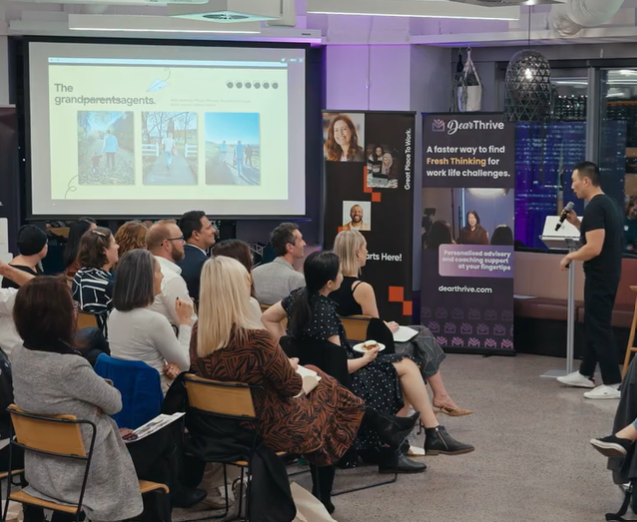
Paul Redfern, co-CEO at Big Picture Medical, spoke at a recent SPARK event about how AI is better understood as a collaborator than a tool, and that leaders who build on a few timeless principles will do better than those chasing the latest technology option.
Here's what he covered, and what it means for anyone leading a team through AI change right now.
AI isn't a hammer
Paul opened by challenging the most common framing of AI: that it's a tool. A hammer or a smartphone only does something when you pick it up, and when you put it down it's "a really expensive brick."
AI is different. It can reason with you, analyse information and, increasingly, act on your behalf; and that’s why it’s a collaborator.
The most effective operator in the house
To make the point, Paul pointed to his 18-month-old daughter, the most effective operator in their household.
A toddler has no preconceived workflow, no brief and no project boards. She points, and things get done. The people around her mobilise. Paul realised that she is running a very effective agentic system, and that her superpower comes down to two things:
Intention: she knows what she wants ("Get my water bottle") and says so.
Curiosity: when she doesn't know what something is, the agents around her go and find out, then report back.
Every agentic system needs a checker
The toddler's network includes more than one agent. Paul is one. His wife Nic is another. Nic also does something just as important: she checks Paul's work.
That matters because agents, however devoted, drift. In his household that looks like biscuits before dinner and a steady stream of toys and books that make a lot of noise. The agents get the job done, but without governance, structure and boundaries, they go a little rogue.
The same applies in organisations. You need something that audits and tracks the work, or your agentic system won't hold up.
Roles aren't being replaced, they're being reshaped
Paul cited BCG research suggesting around 55% of roles will be reshaped within the next two years. The roles will still exist, but the responsibilities, tasks and actions that make them up will change.
He called it a once-in-a-lifetime shift, and stressed that it isn't really a technological one. It's about people.
Before you pick a model, start with three principles
It's easy to get swept up in the technology choices. His organisation, for example, uses AWS, where Amazon Bedrock lets teams choose between different models. But before any of that, Paul offered three principles that have always built effective teams, with or without AI.
1. Trust
Your people are smart, capable, driven and curious. Give them the trust, the accountability and the authority to make sensible decisions. That doesn't mean no governance. A toddler doesn't get to do whatever she likes either. But governance without trust gets you compliance, not imagination.
2. Boundaries
Boundaries aren't only about people and teams. They're also about deciding what you want to keep human. Paul's examples:
Customer interviews, which should be empathetic and directly human
Onboarding new team members, which should stay strictly human
There's a lot AI can do, but some things in your business should be clearly marked: "This is not an AI thing."
3. Visibility
Make your experiments, lessons, stumbles and failures visible. In Paul's organisation, a Slack channel is where people share all of it. Leaders have a particular responsibility here. If you hold a position of power, you need to take part in that conversation and own your own errors, so that others feel safe to do the same.
Where a toddler reaches today, and where she'll reach tomorrow
Paul closed on a personal note. Right now, a toddler doesn't reach for tools. She reaches for people, and for interactive collaboration. In the future, she'll be reaching for agents. And one day, someone is going to tell her to be more realistic, a day Paul says he dreads.
That, he argued, is the job of leaders: to make sure their people feel safe to imagine and supported to explore.
Where to start with AI
Decide which things in your business should stay directly human, and say so clearly.
Create a visible place for experiments and failures, such as a Slack channel, and take part yourself.
Name who or what checks the work when AI is acting on your team's behalf.
Give your people the authority to make decisions, within the governance you've set.
The takeaway for leaders
The technology will keep changing. The model you choose this year may not be the one you use next year. Trust, boundaries and visibility are what hold an AI-enabled team together. If you get them right, the shift ahead can be the most profound one of our lifetimes. If you ignore them, you'll end up with devoted, capable agents that wander off and bring you biscuits before dinner.
If you're leading a team and working out where AI belongs in how you work, the AI Advisors at Dear Thrive can help.